.webp)








.webp)


So, you want to hire a restaurant consultant. Maybe sales are slipping, service feels inconsistent, costs are harder to control, or the business is growing faster than the systems can support.
Before making recommendations, a good consultant needs to see how the restaurant actually runs. That means looking at prep, service, kitchen flow, management habits, guest experience, menu performance, and the numbers behind the operation.
The first problem an owner notices is not always the root issue. Slow service may come from prep timing or communication. Rising food costs may come from waste, portioning, vendor pricing, or menu mix. Inconsistent guest experiences may come from unclear standards or training gaps.
This evaluation serves as the foundation for any effective recommendation, providing a clear starting point for deeper analysis.
Understanding the Owner's Goals
A good restaurant evaluation starts with the owner's goals. Some owners want higher profits, smoother operations, a stronger menu, better leadership, improved service, expansion readiness, or help preparing for a turnaround. Others know something is wrong but need help identifying the real source of the problem.
Restaurant consultants should begin by asking what success looks like for the owner. A recommendation that makes sense for a fast-growing restaurant group may not fit an independent operator focused on stabilizing a single location. A menu change intended to support profitability may need to be handled differently if the restaurant's main issue is brand confusion or weak service execution.
Clarity around goals makes each step of the evaluation more focused. Next, consultants connect these goals to the restaurant’s operational realities.
Reviewing Financial Performance
Financial review is a key part of restaurant consulting because many operational problems show up in the numbers. Consultants may review sales patterns, food costs, labor costs, prime costs, menu mix, check averages, discounts, waste, rent, vendor pricing, payroll structure, and profitability trends.
The goal is to understand what the numbers are saying about the restaurant. High sales may still leave an owner with weak profit if labor, food cost, waste, rent, or management inefficiencies are too high. Lower sales may be connected to service issues, menu positioning, local competition, pricing, marketing, or an outdated guest experience.
A financial review bridges the gap between surface symptoms and underlying issues, preparing consultants to observe how day-to-day operations reflect in the numbers.
Observing Daily Operations
Restaurants are active businesses, so consultants need to observe the restaurant in action. A dining room may look organized before service and still struggle once the rush begins. A kitchen may appear efficient during prep, but slow down when ticket volume increases.
Consultants may look at opening procedures, kitchen workflow, station setup, prep systems, ordering habits, service pacing, communication, table management, cleanliness, manager presence, and guest recovery. They may also watch how the team responds under pressure because that often reveals where systems are unclear.
This real-world observation naturally leads to the evaluation of other critical elements, such as the menu, which further shape daily operations.
Reviewing the Menu
The menu is one of the most important parts of a restaurant evaluation because it affects the brand, guest experience, kitchen execution, food cost, labor, inventory, and profitability. Restaurant consultants may review menu item performance, pricing, contribution margin, ingredient usage, prep complexity, item descriptions, layout, category balance, and operational fit.
A menu can be popular and still create problems if it is too difficult to execute, priced incorrectly, or disconnected from what guests value most. Menu development should support both the concept and the business model.
With menu insights in hand, consultants turn their attention to the broader guest experience, since every aspect of restaurant performance shapes how guests feel.
Looking at Service and Guest Experience
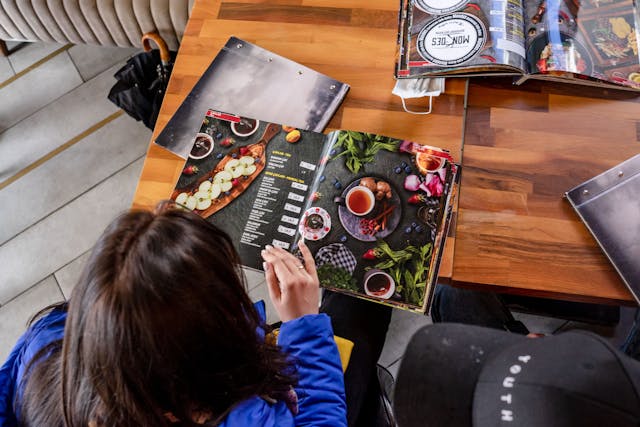
The guest experience is shaped by more than food. It includes the greeting, timing, table touches, menu knowledge, cleanliness, atmosphere, problem resolution, and overall hospitality experience. Consultants may review online reviews, guest feedback, service flow, staff communication, FOH training, and the consistency of the experience across different shifts.
Strong service depends on training, leadership, and clear expectations. When every shift feels different, guests may struggle to know what to expect from the brand. To address this, a restaurant consultant can help define service standards and pinpoint where training or systems need improvement.
Evaluating Management and Team Structure
Restaurant performance often depends on the strength of the management team. Consultants may review manager roles, accountability, communication routines, training systems, scheduling practices, leadership gaps, and decision-making during service.
A strong management foundation lays the groundwork for improvements across the restaurant, setting the stage for frequently asked questions about consultant partnerships.
FAQ: Working With Restaurant Consultants
What do restaurant consultants look at first?
Restaurant consultants usually start by reviewing the restaurant's goals, financial performance, operations, menu, labor structure, guest experience, management systems, and service flow. The goal is to understand the full business before recommending changes.
How long does a restaurant evaluation take?
The timeline depends on the restaurant's size, the project’s scope, and the issues being reviewed. Some evaluations can begin with a focused operational review, while larger projects may involve deeper analysis of financials, staffing, menu performance, training, and guest experience.
Why should I hire a restaurant consultant instead of fixing problems internally?
Internal teams know the restaurant well, but they may be too close to daily operations to clearly see certain patterns. A restaurant consultant brings an outside perspective, industry experience, and practical recommendations grounded in current business realities.
Recommendations Should Fit the Restaurant
The best restaurant consulting recommendations come from careful evaluation. Before changing the menu, restructuring operations, adjusting staffing, or planning expansion, consultants need to understand the restaurant's numbers, systems, team, guest experience, and goals.
Synergy Restaurant Consultants partners with restaurant owners to evaluate operations, identify opportunities, and develop practical improvement plans. Because strong recommendations require real insight into the business, evaluation is a crucial step in the consulting process.