.webp)







.webp)


If your new year planning has looked anything like most operators’, January has already been filled with forecasts, trend slideshows, and big questions about where the industry is heading. Some predictions are noise, others matter. As you build your game plan for 2026, it helps to distinguish where real demand and competitive pressure are coming from and where your team’s energy should go.
Below are the most actionable themes, not just interesting, along with some practical moves operators can make now to get ahead of the pack.
The Middle Is Getting Squeezed — Distinct Positioning Wins
One of the most significant shifts we saw in 2025, and one that’s likely to continue into 2026, is a widening gap between restaurant segments. Fast casual has sharpened its value/quality equation, and full service has leaned into experience and hospitality, leaving operators with neither clear value nor differentiated experience, and increasingly pressured.
This isn’t just a perception. Many of the concepts that struggled over the past year shared the same problem: they didn’t stand for anything specific. They weren’t clearly value-driven, they weren’t clearly premium, and they didn’t deliver a memorable experience, they just sort of lived in the middle. And in today’s market, the middle is a tough place to survive. Guests have endless choices, so if your concept doesn’t give them a clear reason to pick you, they won’t.
So what does that look like in practice?
- Know what you are. Are you all about culinary craft? Are you the best value in your neighborhood? Do you exist to create a standout guest experience? If you can’t articulate it, your guests definitely can’t.
- Play to your strengths. If warmth and service are your superpower, make that the star. If your kitchen can hang with the best of them, build your story around that. Most brands don’t need to be everything, they just need to be the right thing.
- Don’t be afraid to narrow the focus. A cleaner menu and a clearer identity aren’t limiting, they make execution sharper, costs more predictable, and the guest experience easier to understand.
Brands that stay vague or overly broad often get passed over for those that plant a flag and defend it. The operators who commit to a point of view, and express it consistently, are the ones gaining ground.
Guests Want Ease and Connection
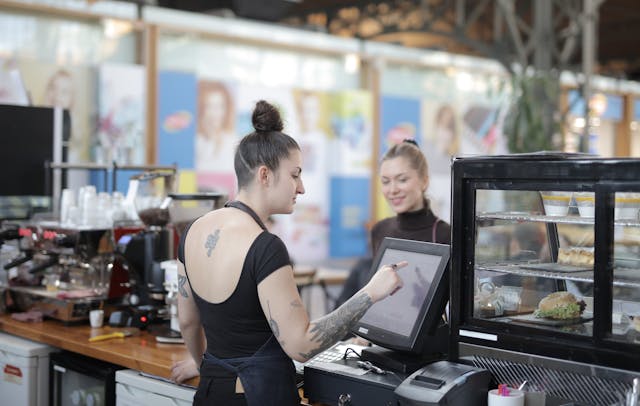
Diners today expect two things at the same time: convenience before they walk in, and hospitality once they do. They want to book without calling, check waits online, get a text when their table’s ready, pay fast—then they want a team that actually notices them, remembers them, and treats them like guests, not ticket numbers.
For operators, that means service and technology have to work together. Tech shouldn’t be a gimmick; it should clear bottlenecks and reduce friction, not replace human connection. If it doesn’t make reservations, ordering, communication, or payment easier, it’s probably not worth adding. When the digital side runs smoothly, the front-of-house has more time and headspace to focus on the thing guests actually come back for: hospitality.
- Train for both sides of the guest experience: FOH teams should be as fluent with tech as they are with warm hospitality, answering questions, remembering guests, and resolving issues.
- Keep personalization high: Use guest data to inform service, but don’t let automation feel like a barrier.
Getting convenience right doesn’t make hospitality less important; it enables it.
Profitability Favors Operators Who Actually Watch Their Numbers
There’s no more room for guesswork. Costs are up, traffic is unpredictable, and the days of looking at your P&L once a month and calling it “good enough” are gone. The operators who are coming out ahead are the ones who:
Look at prime cost every week
- Know exactly which menu items earn their keep and which ones don’t
- Schedule labor based on real demand patterns instead of gut instinct
- Make decisions off actual numbers, not assumptions
This isn’t about becoming an accountant — it’s about paying attention. When you keep an eye on the right numbers, you can spot problems early, adjust, and protect margin in a way that isn’t possible when you’re always looking in the rearview mirror. In a tough environment, the operators who stay curious and stay close to the data are the ones who hold onto profitability.
Even macro-level reports point to a cautionary business environment — many forecasts call for more conservative pricing strategies in 2026 as consumer confidence fluctuates and operators focus on unit-level economics rather than expansion.
Five Strategies That Make the Start of the Year Count
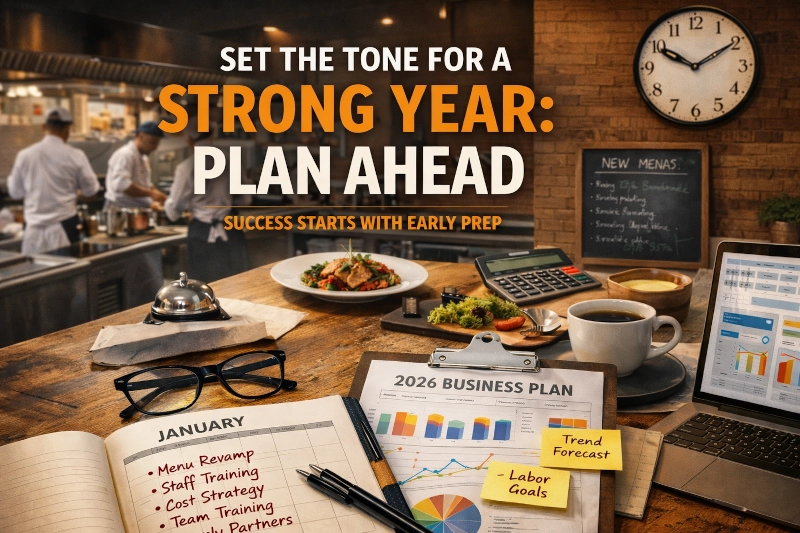
If you want a smoother spring and a stronger summer, the work starts now. A few things worth tackling early:
1. Get honest about the numbers.
Don’t build this year’s plan off wishful thinking. Look at what actually happened last year — sales patterns, labor swings, food cost, traffic — and build your forecast from real performance, not optimism.
2. Front-load your training.
Q1 is the time to reset standards, coach up new hires, and clean up sloppy habits. Trying to “fix” training in the middle of the busy season never works. When the foundation is solid by March, everything runs cleaner when volume hits.
3. Don’t wait until spring to fix the menu.
Every year, April rolls around and owners suddenly notice half the menu isn’t selling or margins are upside down. Do the clean-up now. Look at what’s actually moving, what’s dead weight, and what items are quietly making the most money. Trim the losers, lean into the winners, and give the kitchen time to get consistency and pricing right before the crowds show up.
4. Treat suppliers like partners, not emergencies.
Check in with suppliers early, talk through what you expect to order, and see where there’s room on pricing or product. Those conversations go a lot better when you’re not in the middle of a crisis.
5. Protect your culture — burnout destroys hospitality.
Teams don’t fall apart over one bad shift; they fall apart slowly when expectations are unclear, support is missing, and leadership is reactive instead of steady. The best operators know that great service depends on people who still enjoy coming to work. Invest in communication, fairness, coaching, and reasonable standards. Your guests feel the difference immediately.
Reality Check: Complexity Isn’t Going Away — But Clarity Helps
If last year proved anything, it’s that hope alone doesn’t keep a restaurant afloat. The industry isn’t getting simpler, but the playbook is becoming more obvious: know your numbers, know your guests, and know who you are as a brand. The places that do well in a tough market are the ones that actually pay attention — to their numbers, their guests, and who they are as a brand. It’s not easy, but it works.
If you bring that mindset into 2026; curious, disciplined, and plugged into both data and guests, you’ll be in a far better position to steer the year instead of reacting to it.
At Synergy Restaurant Consultants, we work with operators to strengthen positioning, tighten operations, and improve profitability through real-world experience—not theory. From menu engineering and labor strategy to brand identity and team training, we help you turn clarity into results. Reach out today!