.webp)








.webp)

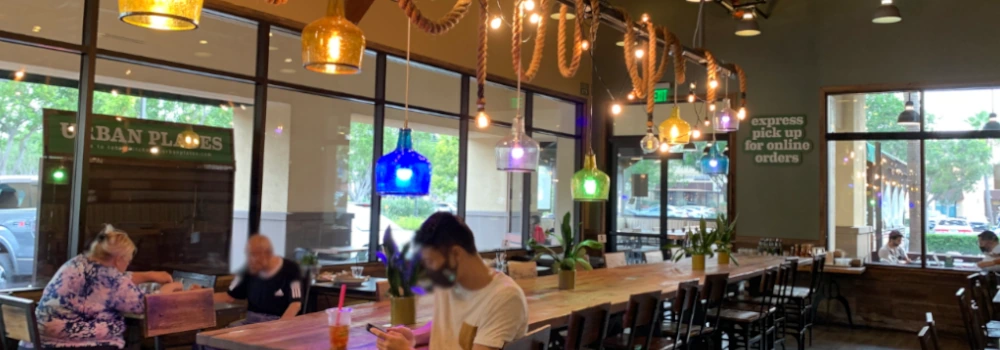
For years, fast casual was the restaurant industry’s golden child—offering better food than fast food, quicker service than casual dining, and strong unit economics. But 2025 has served as a reality check: traffic is slowing down, some major brands have fallen short of expectations, and guests are increasingly questioning whether that $14 bowl is “worth it.”
The question isn’t whether fast casual is going away. It’s whether your concept still earns its place in the middle of the value spectrum.
What the latest data says about fast casual in 2025–2026
Multiple industry sources are reporting a similar story:
- Fast casual’s “boom” is slowing down. According to Technomic’s 2026 U.S. Foodservice Trends, momentum for fast-casual brands will continue to cool as the segment reaches maturity after roughly doubling in size over the past decade and facing more significant growth challenges.
- QSR is increasing its share of customer traffic. The IFDA–Technomic Quarterly Brief on 2026 foodservice trends notes that quick service is now catching up to fast casual in customer visits, driven by stronger value offers and aggressive limited-time deals.
- Spend is weakening across all income levels. Consumer Edge’s fast-casual insight flash dining reveals that growth in fast-casual spending has turned negative across every income group so far in 2025, indicating broad-based pressure rather than just a pullback among low-income consumers.
- Segment performance is no longer best-in-class. Black Box Intelligence’s October 2025 industry review shows that fast casual is one of only two segments with negative same-store sales that month (alongside family dining), a stark contrast to its outperformance earlier in the decade.
Zooming out, the long-term picture is still fairly bullish. Allied Market Research’s fast-casual market report values the global fast-casual restaurant market at $124.5 billion in 2022 and projects it will reach $337.8 billion by 2032, with a 10.4% CAGR. Allied Market Research notes the category is growing—but that growth will be uneven.
Why the fast-casual “sweet spot” is getting squeezed
Fast-casual restaurants traditionally occupied the space between quick-service and casual dining. Today, that space feels crowded and expensive to many guests. A few key pressures:
1. Check fatigue and the “$20 lunch” narrative
Years of price increases have pushed average checks into a range where guests start comparing fast casual to full-service restaurants. Consumer Edge’s cohort analysis suggests that even higher-income diners are reevaluating how often they visit, not just what they order. Consumer Edge
2. QSR has upgraded—and remained more affordable
Quick-service brands have upgraded ingredients, invested in digital ordering, and leaned into aggressive deals. The IFDA–Technomic brief notes that quick service is gaining traffic as value-conscious customers do straightforward trade-down math: a craveable QSR sandwich meal versus a fast-casual bowl that costs considerably more.
3. Casual dining is fighting back on value and experience
Black Box’s segment data shows casual dining regaining momentum, helped by perceived value in table service, ambiance, and promotions like happy hour—even as fast casual struggles with negative same-store sales. Black Box Intelligence notes that at a similar price point, a “night out” can sometimes win over a counter-service experience.
4. Macro pressure hits the middle first
Reuters’ coverage of Chipotle’s latest earnings highlights how households earning under $100,000 —roughly 40% of its customer base—have reduced spending, especially 25–35-year-olds facing student loan payments and a soft job market. Reuters notes that when budgets tighten, mid-priced occasions are often the first to be questioned.
Is fast casual “broken”? Not exactly—but the old playbook is
The underlying value proposition of fast casual—quality and customization with convenience—still resonates, but the expectations have increased. Guests now expect both quality and good value, not just one or the other, and operational fundamentals like speed, accuracy, and cleanliness are expected rather than competitive advantages. Claims of “fresh,” “better ingredients,” or “build-your-own” no longer stand out because nearly everyone uses the same language. What worked in the 2010s—being newer, cleaner, and slightly more premium than legacy QSR—isn’t enough in 2026; the brands that will continue to grow are those that refine their value story and improve execution.
How smart fast-casual operators can respond in 2026
Here are the practical levers we recommend to operators:
1. Rebuild your value ladder
- Establish a clearly marketed entry-level hero product (or bundle) at a psychologically appealing price—typically under $10 or $11, depending on your market.
- Offer a clear good–better–best pricing structure, not just a menu that subtly encourages everyone to choose the top tier.
- Use bundles wisely: combine high-margin sides and drinks with main entrées to maintain perceived value without sacrificing profit.
2. Simplify where guests don’t feel the benefit
- Remove SKUs that add complexity without clear evidence of guest love (review item-level mix and review data).
- Reinvent a few signature items to make them visually appealing and clearly “worth it” for price-sensitive guests.
- Make freshness and abundance visible—prep theater, colorful toppings, and clear portioning all contribute to perceived value.
3. Address experience gaps that drive guests to QSR or casual dining
- Audit your busiest hours: how long are lines really? How many orders are wrong? What does the dining room look like at 12:30 p.m.?
- Train teams to meet consistent standards for speed, warmth, and accuracy during peak hours, not just in mid-afternoon.
- Streamline the digital pickup flow so that app, third-party delivery, and in-store orders don’t compete for the same crowded bottleneck.

4. Use digital offers precisely, not randomly
- Replace blanket discounts with segmented offers based on behavior: win-back campaigns, off-peak incentives, and targeted add-on offers.
- Push digital ordering toward experiences that genuinely feel easier than standing in line—saved favorites, one-tap reorders, and transparent ready times.
- Create a loyalty program that focuses on value (for example, predictable earning and spending) instead of one-time promotions that teach customers to wait for coupons.
5. Explain why you’re the best choice in the “noisy middle”
Your concept should have a simple, memorable answer to “Why you and not them?” Consider:
- Are you mainly the health-forward, crave-forward, speed-forward, or experience-forward option?
- What do your reviews praise—flavor, portions, speed, friendliness—and does your marketing focus on that or overlook it?
- Can a guest describe your concept to a friend in one sentence without mentioning your logo, decor, or social media aesthetic?
If your organization’s answer isn’t clear, your guests won’t understand it either.
The growth story is still there for operators who adapt
Forecasts from Allied Market Research indicate that the fast casual sector will continue growing globally through 2032, driven by demand for convenience, customization, and healthier choices. However, in a mature, inflation-sensitive market, growth will favor brands that deliver:
- Clear, defendable value
- Consistent, reliable operations
- Disciplined, guest-led menu strategy
- Distinct, memorable brand positioning
Fast casual isn’t losing its edge—it’s sharpening. The real question is whether your concept sharpens with it.