.webp)








.webp)


2026 is one of those years when “small” changes can create big operational ripples—especially in payroll, third-party delivery, and menu compliance. If you run a restaurant in California, you don’t need to memorize bill numbers. You do need a practical plan that protects margins, reduces risk, and keeps managers from getting blindsided mid-shift.
Below is a plain-English breakdown of the most relevant California laws taking effect in 2026—and the operator actions we recommend to stay ahead. (This is operational guidance, not legal advice.)
1) Statewide minimum wage increased to $16.90/hour
California’s statewide minimum wage increased to $16.90/hour on January 1, 2026. CalDIR
Effect on Operations
- Labor forecasts based on last year’s wage rates are instantly wrong.
- Wage compression becomes real (new hires near lead hourly rate; leads want adjustments).
- Your menu pricing and labor targets may need to be rebalanced.
What to do now
- Re-run your labor model using fully loaded wage cost (wages + payroll taxes + benefits).
- Adjust your pay bands (host/cashier/runner/server support/line cook/prep/dish) so you’re not “negotiating” wages manager-to-manager.
- Update any hiring ads and onboarding documents so the advertised wage matches payroll reality.
2) Exempt manager salary threshold moved up
Because California ties exempt salaries to the state minimum wage calculation, the commonly cited minimum exempt salary threshold for 2026 is $70,304/year. Yahoo
How restaurants get burned here
Restaurants often promote a strong shift lead into an “exempt manager” role without updating compensation or properly documenting duties. That can quickly turn into a wage-and-hour headache.
What to do now
- Audit every exempt role (GM/AGM/KM) for salary threshold and job duties.
- If someone doesn’t meet the threshold, plan a clean reclassification or compensation update (don’t ignore it and hope it goes away).
- Make sure scheduling reflects the reality of the role (if they’re doing mostly hourly work, you’re inviting scrutiny).
3) Delivery platforms: refund rules tightened (AB 578)
Effective January 1, 2026, AB 578 requires food delivery platforms to provide a way for customers to request refunds to the original payment method (not just credits), among other consumer-facing requirements. Senate Judiciary Committee
Why this matters to operators
Although the law targets platforms, restaurants often feel the downstream effects:
- More refund traffic = more chargebacks/disputes + reconciliation work
- Higher platform friction can lead to higher fees or stricter “proof” requirements
- “Missing item” problems become more costly than the food cost
What to do now
- Tighten your “handoff accuracy” SOP: include expo verification, sealed bags, labeling every bag, and verifying modifiers.
- Build a weekly delivery reconciliation habit (refunds, remakes, disputed orders, and fee changes).
- If you’re handling volume, consider photo proof at the bag seal for high-ticket orders (simple and fast).
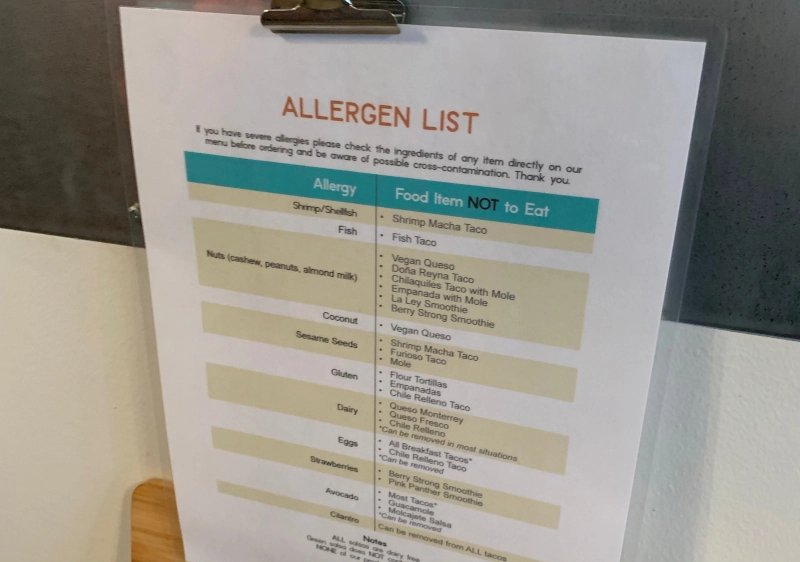
4) Chain restaurants: allergen disclosure requirement begins July 1, 2026 (SB 68)
SB 68 requires certain chain restaurants (as defined in the law) to provide written disclosure of major allergens for menu items beginning July 1, 2026. LegiScan
If you’re a growing brand, don’t wait.
Most chains scramble when they realize allergen disclosure isn’t just “add icons to a menu.” It’s about recipe control, vendor spec control, and training.
What to do now (if you’re scaling or already a chain)
- Standardize recipes and lock in ingredient specs (including sub-ingredients and sauces).
- Create a “change control” process for vendor substitutions and LTOs.
- Update menus consistently across dine-in, online ordering, and third-party listings.
5) CalSavers: small-employer deadline passed, so 2026 is an enforcement reality
California’s CalSavers registration deadlines depend on employer size. For employers with 1–4 employees, the deadline was December 31, 2025 (meaning many small operators feel this most in 2026 if they’re not registered or exempt). EDD
What to do now
- If you don’t offer a qualified retirement plan, confirm that you’re registered with CalSavers (or properly exempt).
- Ensure payroll deductions are set correctly and that your onboarding includes the right notices.
6) Permitting relief for tenant improvements (AB 671)
AB 671 took effect on January 1, 2026, and is intended to streamline certain restaurant permitting and plan review processes (especially for small, independent restaurants retrofitting existing spaces). Governor of California
Why operators should care
Time delays in plan review and resubmittals can derail opening timelines (and cash). Any legitimate shortcut that still passes inspections is worth exploring.
What to do now
- Ask your architect/GC whether AB 671 changes your jurisdiction’s plan review path for your project.
- Treat permitting like a schedule-critical item, not an administrative task.
7) Outdoor dining + expanded licensed areas: extension and updates (AB 592)
AB 592 includes extensions related to outdoor service/operations and certain ABC-related flexibilities through January 1, 2029, as outlined in the bill analysis. Bill Texts
What to do now
- Confirm your local city/county rules (state changes don’t always mean automatic local approval).
- Clearly document your “licensed area boundaries” to avoid problems during inspections.
8) Plastic bag rules: SB 1053 targets covered “stores” starting Jan 1, 2026
CalRecycle’s SB 1053 guidance focuses on covered stores and checkout bag rules effective January 1, 2026. CalRecycle
Restaurant takeaway
Most restaurants aren’t classified as the covered “stores” under bag law definitions, but if you operate a market-style concept (grab-and-go retail, grocery component, pharmacy-in-building, etc.), confirm whether you fall under those rules.
What to do now
- Ask your packaging vendor for SB 1053-compliant options if you also operate as a covered store.
- Train cashiers on what you can charge for and what you can provide.
How Synergy Consultants can help
Synergy Restaurant Consultants has spent decades helping operators translate “policy changes” into simple systems: labor modeling, SOP rollouts, margin protection, and manager training that sticks. If you want a clean 2026 compliance + profitability action plan (with numbers, not fluff), connect with our team at synergyconsultants.com.